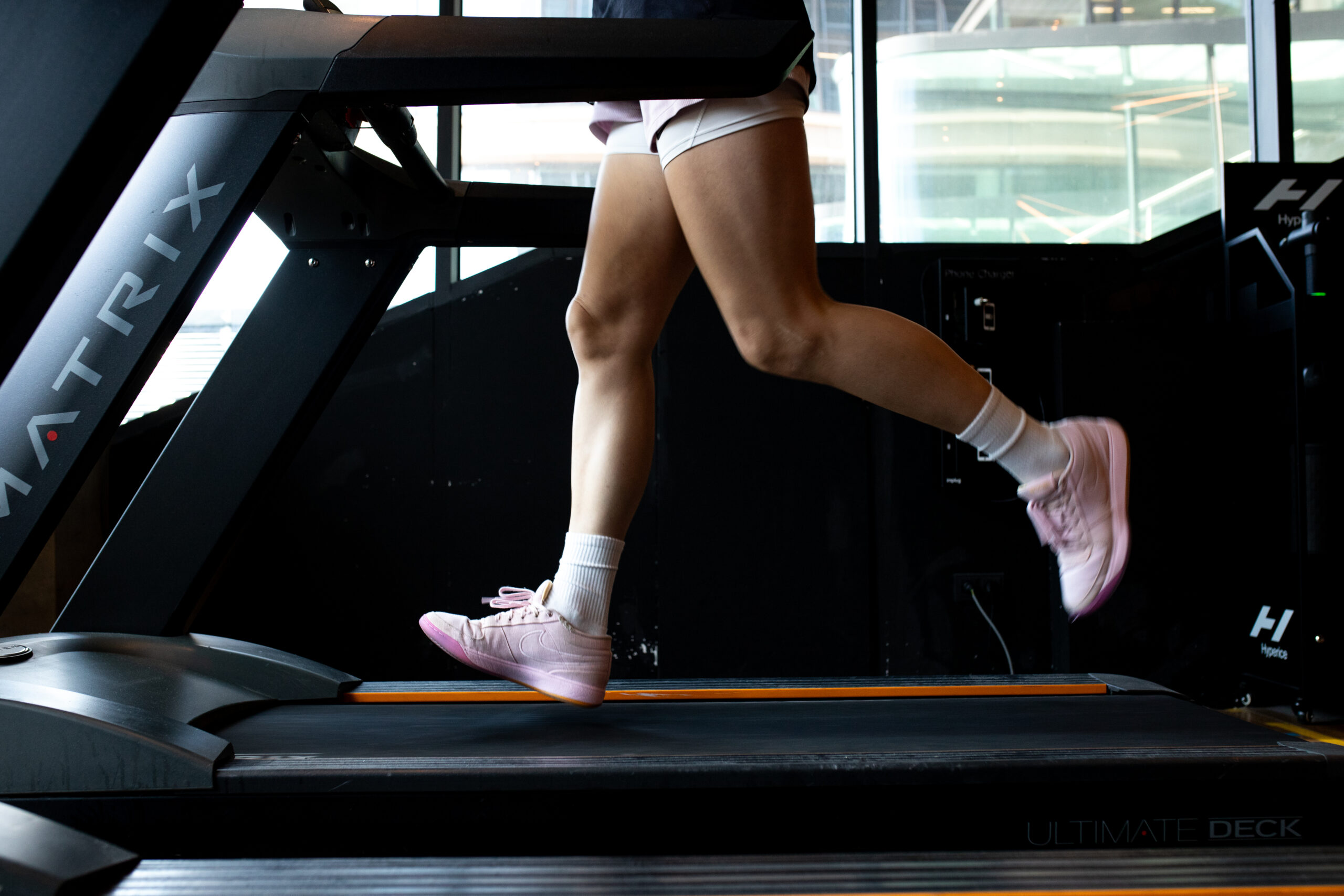
Morning dew, leaves on the road: running season is in full swing! And we love it just as much as you do! Every year, our team takes part in the Dam tot Damloop, and we clock up plenty of kilometers on both asphalt and trails. And we’re certainly not the only ones. Runners come in all shapes and sizes: the rhythmic runners with headphones on, the social runners filling the parks in large packs, the die-hards in carbon-plated shoes, the hesitant beginners, and the seasoned veterans in a vintage marathon T-shirt.
It’s no coincidence that we see more people coming to Movement Pacq with running-related complaints at this time of year. The issues we encounter most often include runner’s knee and other knee complaints, calf and Achilles tendon problems, foot pain, shin splints, and hip pain. You might almost think running is dangerous, but fortunately, that’s far from the truth. What research does show, however, is that novice runners are at greater risk of injury than experienced runners. Practice makes perfect, after all!
The causes
Most of the causes we see can be grouped into a number of categories, which often overlap:
- Not having a running plan.
- Being unable to stick to a running plan.
- Not recovering sufficiently between running sessions.
- Unintentional changes.
- Everything else.
The first category often includes runners who have simply started running and managed to get away with almost anything for a long time. Until, at some point, they run into an injury (pun intended), often when their distances suddenly start increasing. The second category is often about being too busy or struggling to follow a plan because of changing work schedules or other commitments. Runners in the third category are increasing their mileage but still place a high value on pub crawls or have recently welcomed a new addition to the family. The fourth category involves unintentional changes. These might include new shoes that you haven't been used to yet, or a running session in the Spanish hills when you normally train on flat terrain. And the final category? Well, that covers everything else. One thing we often encounter is an old injury flaring up again and limiting someone’s ability to run.
How to prevent running injuries?
Perhaps you recognise yourself in one or more of these categories. By far the majority of running-related complaints are overuse injuries, and many can be prevented with a well-designed plan. But sometimes life gets in the way of following the perfect plan. Or perhaps the plan is perfect, just not for you. Ultimately, it comes down to the relationship between training load and your body’s capacity to handle it. This balance is different for everyone. Your body is adaptable and will adjust to the demands placed on it, provided the stimulus is sufficient and the conditions for recovery are in place. For novice runners, general fitness tends to improve faster than bone and tendon tissue can adapt.
Three tips that are important for every runner:
- Build up gradually. Don’t increase your distance and pace at the same time.
- Prioritise recovery just as much as training. Sleep, nutrition, and relaxation should be your mantra.
- Take early warning signs seriously. Increasing pain or symptoms that persist after running are reasons to ease off.
Our approach
Despite your best intentions, things don’t always go to plan, and you may end up injured. If that happens, the team at Movement Pacq is here to help. We work with you to identify what caused the complaint and which factors contributed to it. We assess your current situation and develop a treatment plan tailored to your needs. Sometimes, this means first rebuilding the injured body part’s capacity to tolerate load. In other cases, simply adjusting your running plan may be enough. We also look at whether we can improve the conditions for recovery, for example by reviewing your nutrition around training sessions and your sleep habits. Together, we’ll find a training schedule that fits your level, personal circumstances, and goals.
Are you experiencing pain or other complaints while running and not sure how to resolve them? Feel free to book an appointment, and we’ll work together to find a solution.
‘Keep Running with the Pacq!’
Sources:
Videbæk S, et al. Incidence of running-related injuries per 1000 h of running in different types of runners. Sports Med. 2015;45(7):1017–26.
Kakouris N, Yener N, Fong DTP. A systematic review of running-related musculoskeletal injuries in runners. J Sport Health Sci. 2021;10(5):513–22.